How to clean up a sewage backup safely in your basement
Raw sewage in your basement is a health hazard. Here's the safe, step-by-step cleanup process Philadelphia homeowners use-and when to call a professional.
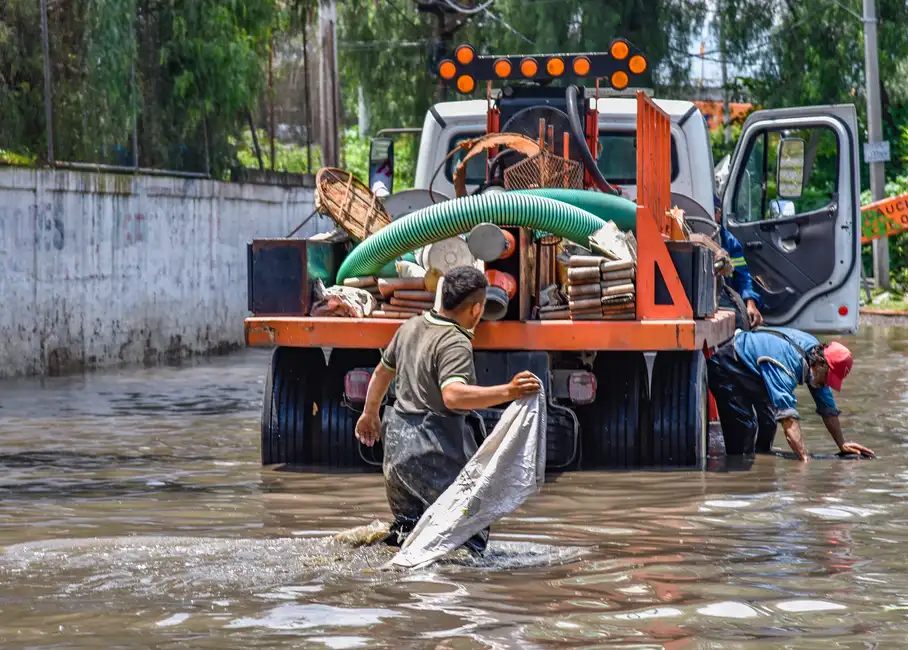
Cleaning up a sewage backup safely in your basement means keeping raw sewage off your skin and out of your lungs, then disinfecting every surface it touched. The job is dangerous because sewage carries bacteria like E. coli, Salmonella, and Hepatitis A, plus parasites and viruses that can make you sick from a single splash. In Philadelphia, where thousands of rowhomes still connect to combined storm-and-sanitary sewers, backups happen most often after heavy rain. This guide walks you through the safe cleanup steps, the gear you need, and the point where calling a pro is the smarter move.
Why sewage backups happen in Philadelphia basements
Philadelphia's older neighborhoods-Kensington, Fishtown, South Philly, West Philly-were built on a combined sewer system that carries both stormwater and household waste in the same pipe. When a heavy storm hits, the system surcharges and the lowest drain in your home, usually the basement floor drain or laundry standpipe, becomes the relief valve. That's why your basement floods with gray, foul-smelling water even if you never flushed a thing.
Other common causes include tree roots invading the lateral line (especially in neighborhoods with mature London plane trees), grease and wipes clogging the main, and aging cast-iron pipes that have cracked or collapsed. If you've had more than one backup in the past two years, the problem is likely in your lateral-the pipe running from your house to the city main-and it won't fix itself.
How do I safely clean up a sewage backup in my basement in Philadelphia?
You safely clean up a sewage backup by protecting your body first, ventilating the space, removing solids and standing water, then disinfecting every surface with a bleach or quaternary solution. Never skip the PPE. Sewage cleanup is not a mop-and-bucket job. The CDC classifies Category 3 water-which is what sewage is-as "grossly contaminated," meaning it can cause illness from any contact.
Before you touch anything, do these three things:
- Shut off power to the basement at the breaker panel if it's safe to reach. If the panel is in the flooded area, call an electrician-do not wade in.
- Open windows and doors. Run a fan pushing air out, not in, to avoid spreading aerosols through the house.
- Keep children, pets, and anyone pregnant or immunocompromised out of the basement entirely until the job is done.
If the water is more than an inch deep or covers more than a small floor area, stop and call a professional. Our sewage backup cleanup Philadelphia PA team handles Category 3 water with commercial extractors, HEPA filtration, and hospital-grade disinfectants-the same equipment hospitals use after a sewage spill.
What to wear and what tools you need
You need rubber boots, waterproof gloves, eye protection, and an N95 or P100 respirator. That's the minimum. Sewage aerosols can carry bacteria into your lungs, and a splash to the eye is a medical emergency. If you don't have a respirator, don't start.
Gather these tools before you begin:
- Rubber boots (tall, not ankle-height)
- Waterproof gloves-heavy nitrile or rubber, not latex exam gloves
- N95 or P100 respirator
- Safety goggles or a face shield
- Wet/dry shop vac dedicated to sewage (you will throw it away or disinfect it after)
- Stiff-bristle brush and scrub buckets
- Bleach (unscented, 5.25%-8.25% sodium hypochlorite) or a quaternary disinfectant
- Heavy-duty trash bags (contractor grade)
- Paper towels or disposable rags
Do not use a household vacuum or a carpet cleaner. They aerosolize bacteria and will be ruined. If you're dealing with a significant volume of water, a basement water extraction Philadelphia PA crew can remove it in hours instead of days.
Step-by-step: safe sewage backup cleanup
Work from the cleanest area toward the dirtiest, and never step in standing sewage without boots. Here's the sequence we follow on every job in Philadelphia, from rowhomes in Port Richmond to twins in Northeast Philly.
1. Stop the source
If the backup is still flowing, call a licensed plumber to snake or jet the line. Cleaning up while sewage is still coming in is wasted effort. If the backup was caused by a storm surcharge, it will stop when the rain stops-but you still need to clear the line afterward.
2. Remove solids and standing water
Use a shovel or scoop to remove solid waste and put it in contractor bags. Then use a wet/dry vac to pull up the remaining water. Work in small sections. Dump the vac water into a utility sink or toilet-never onto the lawn or into a storm drain, which is illegal in Philadelphia and carries a fine.
3. Bag and dispose of contaminated materials
Anything porous that touched sewage-cardboard, carpet, drywall, insulation, cardboard boxes, fabric-goes in the trash. Double-bag it. In Philadelphia, you can set bagged sewage waste out with your regular trash only if it's fully contained; otherwise take it to a city sanitation convenience center.
4. Disinfect hard surfaces
Mix one cup of bleach per gallon of water (or follow the label on your quaternary disinfectant). Scrub floors, walls up to the water line, baseboards, and any concrete or tile with a stiff brush. Let it sit for at least 10 minutes before rinsing. Repeat on any surface that had direct contact with solids.
5. Dry the space completely
Sewage cleanup isn't done until the basement is dry. Mold can start growing within 24 to 48 hours. Run a dehumidifier and fans for at least 48 to 72 hours, and keep the windows cracked when humidity is low. If the space stays damp, you'll be dealing with mold remediation Philadelphia PA within a week.
Common mistakes to avoid
The biggest mistake is treating sewage like clean water. It isn't. Here's what we see homeowners do wrong, and what to do instead.
- Using a regular vacuum or carpet cleaner. These spread bacteria through the air and ruin the machine. Use a wet/dry vac you can throw away, or call a pro.
- Skipping the respirator. If you can smell it, you're breathing it. Wear an N95 or P100.
- Only mopping with soap. Soap doesn't kill pathogens. You need bleach or a quaternary disinfectant.
- Letting it air-dry. Damp basements grow mold fast. Force-dry with fans and a dehumidifier.
- Putting sewage water down the storm drain. That's a code violation in Philadelphia and can contaminate local waterways.
If you've already made one of these mistakes, don't panic-but do get the space tested. A professional water damage assessment Philadelphia PA will tell you whether mold or bacteria are still present.
When to call a professional
Call a professional when the backup covers more than a small floor area, when the water is more than an inch deep, when the sewage has soaked into drywall or carpet, or when you smell it in other parts of the house. Those are signs that contamination has spread beyond what a DIY cleanup can safely handle.
We handle sewage backups across Philadelphia every week. Our team extracts the water, removes contaminated materials, disinfects, and dries the space so you don't trade a sewage problem for a mold problem. If you're not sure whether your situation is a DIY job or a pro job, call us and we'll tell you straight. We also offer water damage restoration Philadelphia PA for any backup that's left behind hidden moisture.
Frequently Asked Questions
How do I safely clean up a sewage backup in my basement in Philadelphia?
Wear rubber boots, waterproof gloves, eye protection, and an N95 respirator. Shut off power if safe, ventilate the space, remove solids and water with a wet/dry vac, then disinfect all surfaces with a bleach solution (1 cup per gallon) and dry the area for 48-72 hours. If the backup is larger than a small area, call a professional.
Is sewage backup cleanup dangerous in Philadelphia PA?
Yes. Sewage is Category 3 water and carries bacteria, viruses, and parasites that can cause serious illness. Never clean it without PPE, and never let children or pets near the area. If you have open cuts, are pregnant, or are immunocompromised, do not attempt cleanup yourself.
Who should I call for sewage backup cleanup in Philadelphia?
Call a licensed water damage restoration company that handles Category 3 water. Water Damage Restoration Philly serves all of Philadelphia and can be reached at 215-281-3000. We handle extraction, disinfection, and drying, and we can also clear the line if a plumber is needed.
How long does professional sewage backup cleanup take?
Most residential basements take 1-3 days for extraction and disinfection, plus 2-4 days of drying. Total time depends on how much water entered and how many porous materials were affected. We give you a timeline after the initial assessment.
Will my insurance cover sewage backup cleanup in Philadelphia?
Standard homeowners insurance often excludes sewer backup unless you added a rider. Many Philadelphia policies offer sewer backup coverage for $5,000-$25,000. Check your policy or call your agent before you start cleanup-document everything with photos first.
Get help with water damage restoration in Philadelphia
If your basement is flooded with sewage, don't wait. The longer it sits, the more it costs to fix. Call Water Damage Restoration Philly at 215-281-3000 for fast, safe sewage backup cleanup in Philadelphia.