Why is my basement flooding after heavy rain in Philadelphia
Basement flooding after heavy rain in Philadelphia almost always traces back to one of five causes. We break down each one and how to stop it.
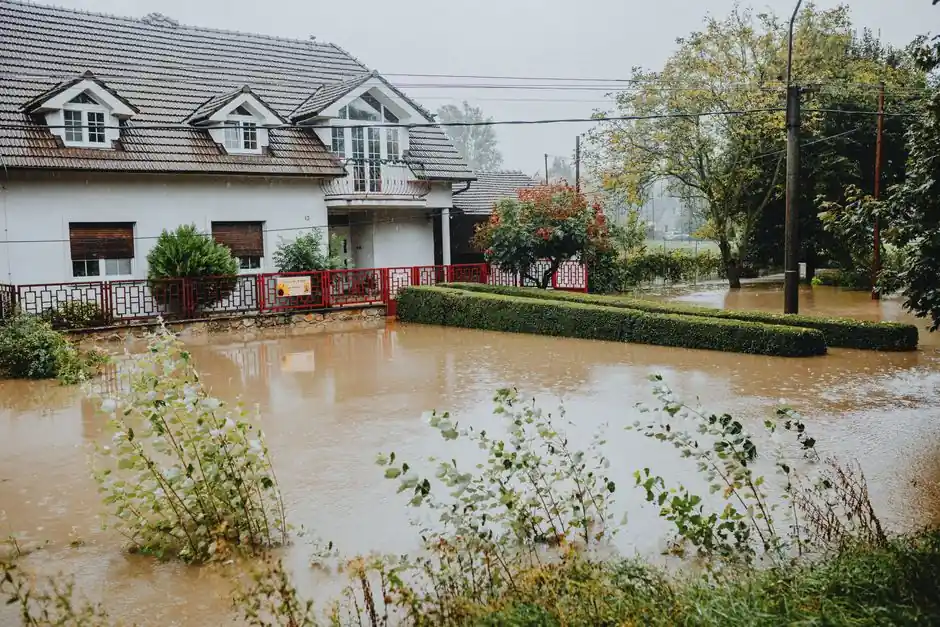
Your basement is flooding after heavy rain in Philadelphia because the ground around your foundation can't absorb water fast enough, and that water finds the path of least resistance into your home. The most common culprits are a failed sump pump, a backed-up municipal storm sewer, hydrostatic pressure pushing through foundation cracks, a clogged or missing window well drain, and grading that slopes toward the house instead of away from it.
We've pumped out hundreds of basements from Roxborough to South Philly, and the story is almost always the same: the rain comes hard, the ground saturates, and water shows up where it shouldn't. Below, we break down each cause, what it looks like in a real Philadelphia basement, and what you can do about it before the next storm.
Why does my basement flood after heavy rain in Philadelphia?
Philadelphia gets about 42 inches of rain per year, but the problem isn't the annual total - it's how fast it falls. A single summer thunderstorm can dump 2 to 3 inches in under an hour, and the city's combined storm-and-sanitary sewer system simply can't handle that volume. When the system surcharges, water backs up through floor drains, washing machine standpipes, and any low-level fixture connected to the main line.
That's the first thing to understand: your basement flooding after heavy rain in Philadelphia is often not your fault. It's a capacity problem in the infrastructure, made worse by the age of the housing stock. More than 80% of Philadelphia's rowhomes were built before 1960, and many still have original clay tile drain lines that have shifted, cracked, or filled with roots over the decades.
For homeowners dealing with this across the city, professional basement water extraction Philadelphia PA is the fastest way to get standing water out before it wicks into drywall and framing.
The five causes we find most often in Philadelphia basements
After thousands of service calls, these are the five failure points we see over and over in Philadelphia basements. Most homes have at least two of them working against each other.
1. Sump pump failure or undersizing
A sump pump that ran fine all spring can quit the first time it's asked to run continuously for six hours. The most common failures we see are float switches stuck in the "off" position, burned-out motors from short cycling, and discharge lines that freeze or clog with debris. If your pump is more than 7 to 10 years old, it's on borrowed time.
We also find plenty of pumps that were sized for a finished basement but installed in a home with a much larger footprint. A 1/3 HP pump moves roughly 2,400 gallons per hour at zero lift - add 8 feet of vertical discharge and that number drops by half. During a Philadelphia cloudburst, that's not enough.
2. Municipal sewer backup
When the city's combined sewer system surcharges, water has nowhere to go but up. If your basement floor drain or laundry standpipe is the lowest point on the line, that's where it comes out. You'll know it's a sewer backup rather than groundwater because the water is dark, smells like sulfur, and often carries debris.
This is a health hazard, not just a mess. Sewage contains bacteria, viruses, and parasites that require proper disinfection. We handle these calls with full PPE and hospital-grade disinfectants - see our sewage cleanup Philadelphia page for what that process involves.
3. Hydrostatic pressure through foundation walls and floors
After 24 to 48 hours of steady rain, the soil around your foundation becomes saturated. Water in saturated soil exerts pressure - roughly 62 pounds per cubic foot - against your basement walls and floor. That pressure finds every hairline crack, every cold joint, every porous patch of mortar.
In older Philadelphia rowhomes, we often see water seeping through the cove joint where the floor meets the wall. It looks like a slow weep, but over a long storm it can leave an inch of water across the entire floor.
4. Window wells and areaway drains
Many Philadelphia basements have window wells or areaway stairs leading down to a basement door. If the drain at the bottom is clogged with leaves, silt, or ice, that well fills like a bathtub and pours over the window sill. We see this constantly in homes with mature street trees - one fall's worth of leaves is enough to block a 2-inch drain line.
5. Poor grading and downspout discharge
Water that should be leaving your property is instead pooling against the foundation. We find downspouts discharging directly at the base of the wall, grading that slopes back toward the house, and concrete patios that have settled over decades and now funnel water toward the basement. The fix is often as simple as extending downspouts 6 to 10 feet from the foundation and re-grading the first 5 feet of soil to slope away at roughly 1 inch per foot.
How Philadelphia's aging infrastructure makes it worse
Philadelphia's sewer system is a combined system, meaning stormwater and sewage share the same pipes in most neighborhoods. During heavy rain, the city's Water Department has to release partially treated sewage into the Delaware and Schuylkill rivers to prevent backups - but that relief valve doesn't always protect individual homes.
Neighborhoods like Fishtown, Kensington, and parts of West Philly have some of the oldest combined sewers in the country, some dating to the late 1800s. When those lines surcharge, basements flood from the bottom up. Homeowners in these areas often need a backwater valve - a one-way flap installed on the main line that lets sewage out but prevents it from coming back in.
If you're in one of these older neighborhoods and you've had more than one backup in five years, it's worth talking to a licensed plumber about a backwater valve and a properly sized sump system. For homes that need full-service recovery after a storm, our residential water damage restoration in Philadelphia, Pennsylvania team handles everything from extraction to structural drying.
How to stop basement flooding after heavy rain in Philadelphia
You can't stop the rain, but you can make your basement much harder to flood. Here's what we recommend to homeowners, in order of impact per dollar spent.
- Install or upgrade a primary sump pump with a battery backup. A 1/2 HP cast-iron pump with a vertical float switch is the workhorse. Add a battery backup system that runs for 6 to 8 hours on a charge - power outages during storms are common in Philadelphia.
- Add a backwater valve on the main sewer line. This is the single best defense against municipal backups. Cost runs $1,200 to $2,500 installed in 2026, depending on access and pipe material.
- Extend downspouts and re-grade. Keep water 6 to 10 feet from the foundation. Clean gutters twice a year - late spring and late fall.
- Seal cracks and cove joints. Hydraulic cement and epoxy injection work for hairline cracks. For active weeping along the floor-wall joint, a interior drainage system with a sump pit is the long-term fix.
- Keep window well drains clear. Check them before every storm season. A $15 drain grate saves a $3,000 cleanup.
If you've already got water in the basement, the priority shifts from prevention to getting it out fast. Our emergency water removal Philadelphia PA crews are on call around the clock during storm events.
Common mistakes homeowners make after a basement flood
The first 24 to 48 hours after a flood determine whether you're dealing with a cleanup or a full reconstruction. These are the mistakes we see most often when we arrive on site.
- Waiting for the water to drain on its own. Standing water wicks up drywall within hours. After 24 hours, you're looking at mold growth - and Philadelphia's humid summers make that timeline shorter, not longer.
- Using a shop vac and a box fan. A shop vac removes surface water but does nothing for the moisture trapped in framing, insulation, and subfloor. A box fan just moves humid air around. You need commercial dehumidifiers and air movers to dry a basement properly.
- Walking through sewage water without protection. If the water came up through a drain, it's Category 3 - black water. That means bacteria, viruses, and parasites. Don't wade in it in sneakers. Don't let pets or kids near it.
- Throwing away wet items too soon. Many documents, photos, and textiles can be saved with proper freeze-drying or pack-out cleaning. Don't haul everything to the curb before a professional takes a look.
- Not documenting the damage. Take photos and video before you move anything. Your insurance adjuster will need them, and so will we if we're handling the claim documentation.
When to call a professional
Call a professional when the water is more than an inch deep, when it came up through a drain or toilet, when you can smell sewage or musty odors, or when the flooding has happened more than once. Those are the situations where DIY cleanup leaves hidden moisture that turns into mold three weeks later.
At Water Damage Restoration Philly, we handle the full scope: emergency extraction, structural drying, mold remediation, and reconstruction. We work directly with your insurance adjuster and document everything with moisture readings and photos. If you're not sure whether you need help, call us and we'll tell you honestly - sometimes the answer is a fan and a dehumidifier, and we'll say so.
Frequently Asked Questions
Why does my basement flood after heavy rain in Philadelphia?
Philadelphia's combined sewer system surcharges during heavy rain, pushing water back through floor drains. At the same time, saturated soil creates hydrostatic pressure that forces water through foundation cracks and cove joints. Most basements flood from a combination of both, plus a sump pump that can't keep up.
How do I stop my basement from flooding in Philadelphia PA?
Install a 1/2 HP sump pump with battery backup, add a backwater valve on the main sewer line, extend downspouts 6 to 10 feet from the foundation, and re-grade soil to slope away from the house. Clean window well drains twice a year. These five steps prevent the vast majority of basement floods.
Who do I call for basement flooding in Philadelphia?
Call a water damage restoration company that handles emergency extraction, drying, and mold prevention. Water Damage Restoration Philly serves the entire city and can be reached at 215-281-3000. We respond 24/7 during storm events and work directly with your insurance company.
How much does basement flood cleanup cost in Philadelphia?
Typical 2026 pricing for a standard basement flood cleanup in Philadelphia runs $1,800 to $4,500 for extraction and drying, depending on square footage and water category. Sewage backups cost more because they require full disinfection. Most homeowners pay only their deductible.
Can I prevent sewer backups in my Philadelphia basement?
Yes. A backwater valve installed on your main sewer line is the most effective prevention. It's a one-way flap that lets wastewater out but blocks it from re-entering during a surcharge. Installation runs $1,200 to $2,500 and typically takes half a day.
Get help with water damage restoration in Philadelphia
If your basement is wet right now, every hour counts. We extract the water, dry the structure, and treat for mold before it becomes a bigger problem. Call Water Damage Restoration Philly at 215-281-3000 - we're available 24/7 for emergency basement flooding across Philadelphia.